
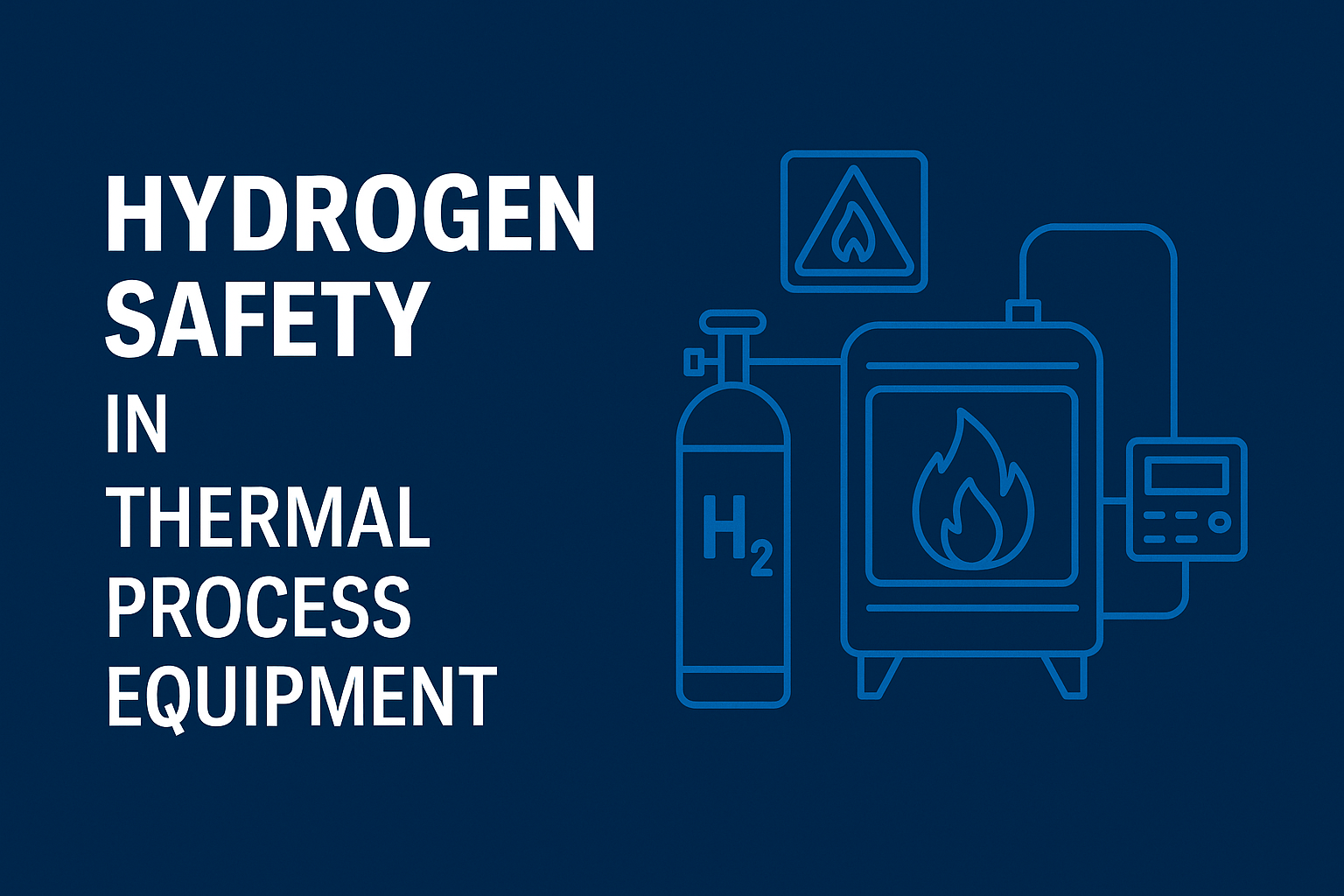
Ensuring Safe Operation in High-Performance Furnace Environments
Hydrogen is rapidly becoming a critical enabler of cleaner energy systems and advanced industrial processes. Its high reactivity, lightweight nature, and energy density make it important for applications such as metal reduction, thermal treatments, and atmosphere-controlled materials research.
However, these same properties also introduce serious safety challenges. In laboratory and pilot-scale environments, safe handling of hydrogen in thermal process equipment is essential to protect both researchers and facilities.
This guide highlights key risks and best practices for safely using hydrogen atmospheres in furnaces, reactors, and thermal processing systems.
Key Hydrogen Hazards in Thermal Equipment
1. High Flammability and Explosion Risk
Hydrogen ignites easily — with a flammability range of 4% to 77% in air and very low ignition energy. A minor leak in a furnace gas line, fitting, or valve can create an explosive atmosphere.
Hydrogen flame is nearly invisible under normal lighting, making detection challenging without proper sensors.
2. Leakage Through Micro-Gaps
Hydrogen molecules are the smallest of all gases, which allows them to permeate fine gaps that would contain other gases safely. Continuous monitoring and high-integrity sealing strategies are essential, especially in rotating or thermal-cycling components.
3. Material Compatibility Concerns
Hydrogen may cause embrittlement and degradation in steels and alloys commonly used in thermal equipment. If component selection is not hydrogen-compatible, the risk of cracking, leakage, or systemic failure increases over time.
4. Cryogenic Safety Risks
In liquid form, hydrogen reaches extremely low temperatures that can cause material fractures and severe freeze-burn injuries. Thermal cycling associated with hydrogen can fatigue components if not properly designed.
Engineering Best Practices for Hydrogen-Ready Furnace Systems
To enable safe hydrogen-based thermal research:
- Use hydrogen-compatible metals such as stainless steels or aluminum alloys
- Prioritize welded connections over threaded fittings for leak prevention
- Maintain strong ventilation with strategic exhaust design
- Install continuous hydrogen detection near ceilings and equipment joints
- Integrate UV/IR flame detectors for invisible flame identification
- Use automated isolation valves tied to safety sensors
- Follow strict purging protocols during startup and shutdown
Proper system engineering significantly reduces risk of fire, explosions, and component failures.
Essential Safety Features for Research Laboratories
To ensure safe day-to-day operation:
- Pressure relief systems rated specifically for hydrogen service
- Color-coded labeling for hydrogen storage and supply lines
- Dual-layer gas shutoff control (primary + emergency)
- Alarm systems with clear escalation paths
- Regular maintenance and leak testing routines
- Non-sparking tools and anti-static precautions
Effective safety procedures protect personnel without slowing research progress.
Partnering for Safer Hydrogen Innovation
Hydrogen will continue to play a major role in decarbonization and advanced materials development. To support these goals safely, researchers must rely on equipment that is designed for hydrogen’s unique properties — not adapted from systems meant for conventional gases.
ANTSLab assists laboratories in implementing:
- Hydrogen-compatible high-temperature furnaces
- Gas-tight sealing and flow control systems
- Advanced monitoring and emergency shutoff designs
- Project-specific engineering consultation
With properly engineered systems, hydrogen can be used confidently to advance new materials and cleaner industrial processes.
Need a Hydrogen-Compatible Tube Furnace?
Share your experimental parameters to receive a technical configuration recommendation.